An AI-powered robot that detects and picks up plastic and non-biodegradable objects near it, entirely on its own. Here is what it does and how each part contributes.
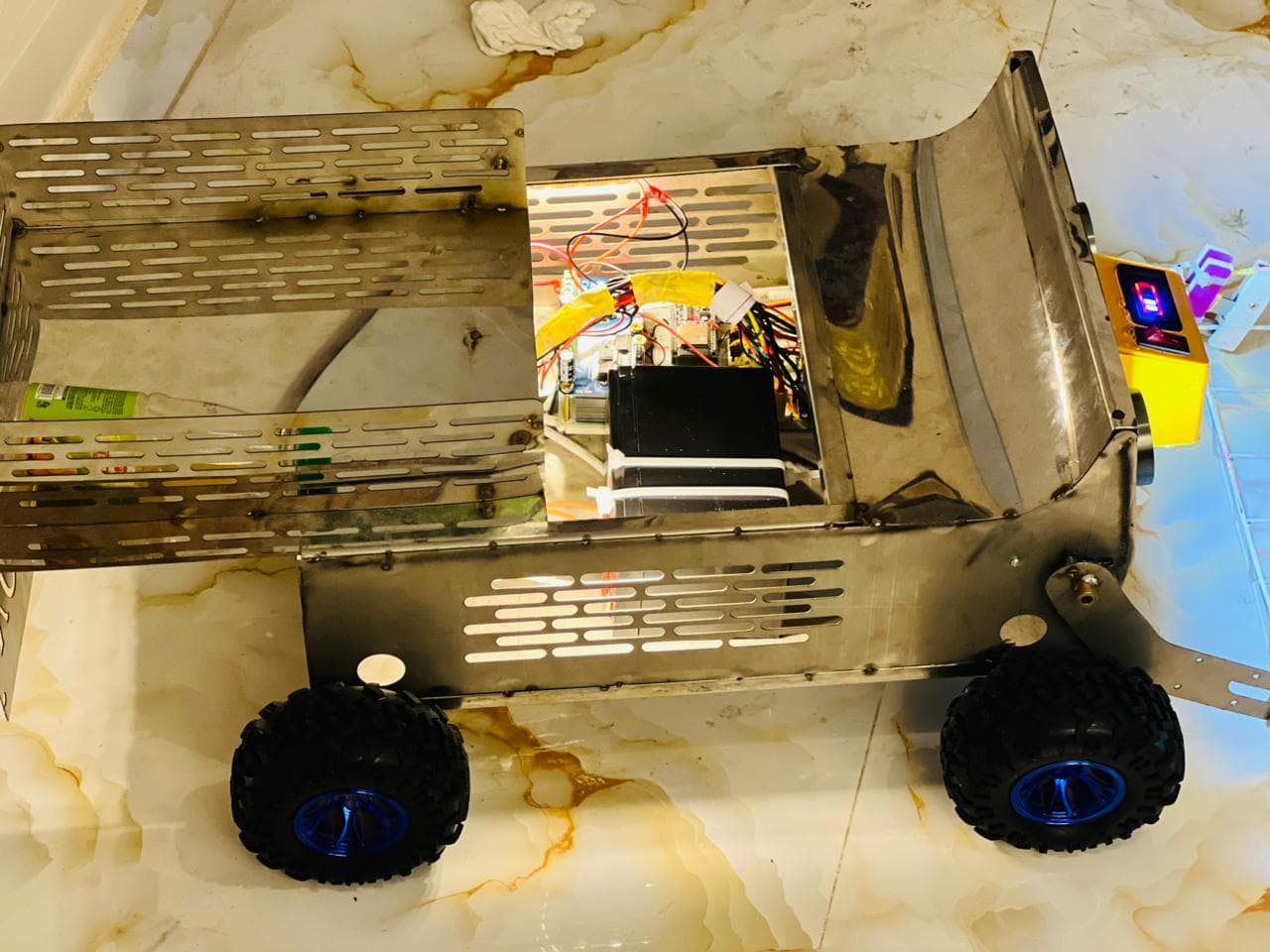
The whole vehicle: a welded stainless frame, a slotted cargo bed and the electronics sitting open behind the cab.
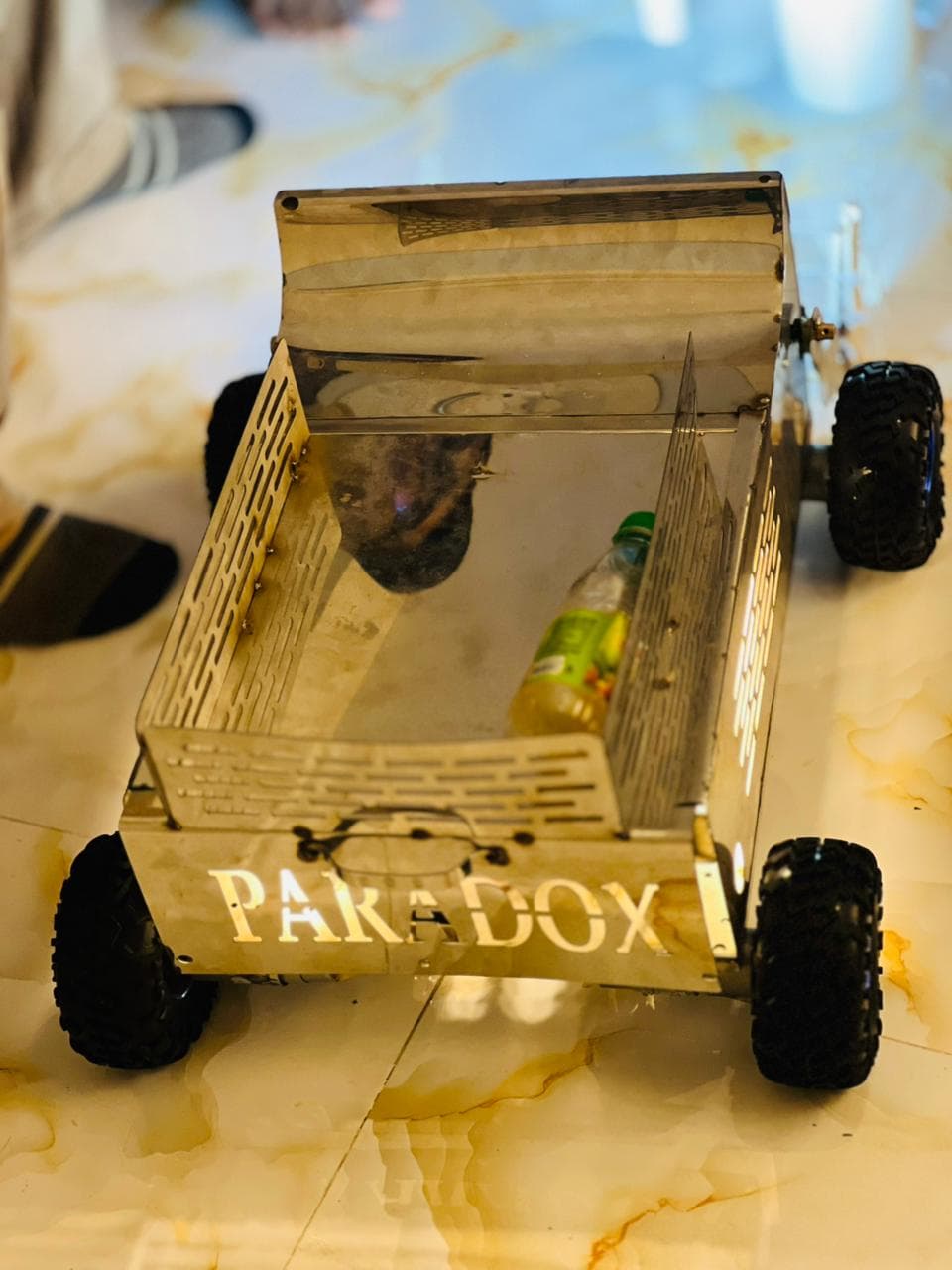
The tailgate, with the team name cut straight through the sheet.
Five stages, running continuously. Nothing in this loop waits on a person.
01Perceive
Continuous scanningThe robot continuously scans its surroundings through an onboard camera. There is no remote operator and no waiting for instructions — observation runs the whole time it is powered on.
02Identify
Object detectionAn AI detection model separates plastic and other non-biodegradable objects from everything else in view. Leaves, soil and background clutter are ignored so the robot only acts on what it is meant to collect.
03Approach
Self-directed navigationOnce a target is identified, the robot works out where it sits relative to itself and drives toward it, adjusting as the view changes on the way.
04Collect
Pick and storeThe collection mechanism picks the object up and stores it on board, keeping the waste contained rather than pushing it somewhere else.
05Continue
Repeat the loopWith the object secured, the robot returns to scanning and moves on to the next one. The loop repeats for as long as it has power.
A short clip from a test run — driving under its own power with collected bottles already in the bed.
It carries what it collects
The bottles in the bed are from the run itself. Waste stays on board instead of being pushed along the ground.
Four driven wheels
Knobby off-road tyres on all four corners, so it keeps traction on the uneven surfaces waste actually ends up on.
Nobody is steering
There is no controller in anyone's hands. What you are watching is the robot working through its own loop.
Six subsystems, each responsible for one job in the loop.
Vision
Onboard camera
Supplies the live view the detection model runs on.
Intelligence
AI detection model
Classifies what is waste and what should be left alone.
Mobility
Driven chassis
Carries the robot to each object it has identified.
Collection
Pickup mechanism
Lifts the object and moves it into onboard storage.
Storage
Onboard container
Holds collected waste until it can be emptied.
Power
Battery pack
Determines how long a single cleaning run can last.
Vision
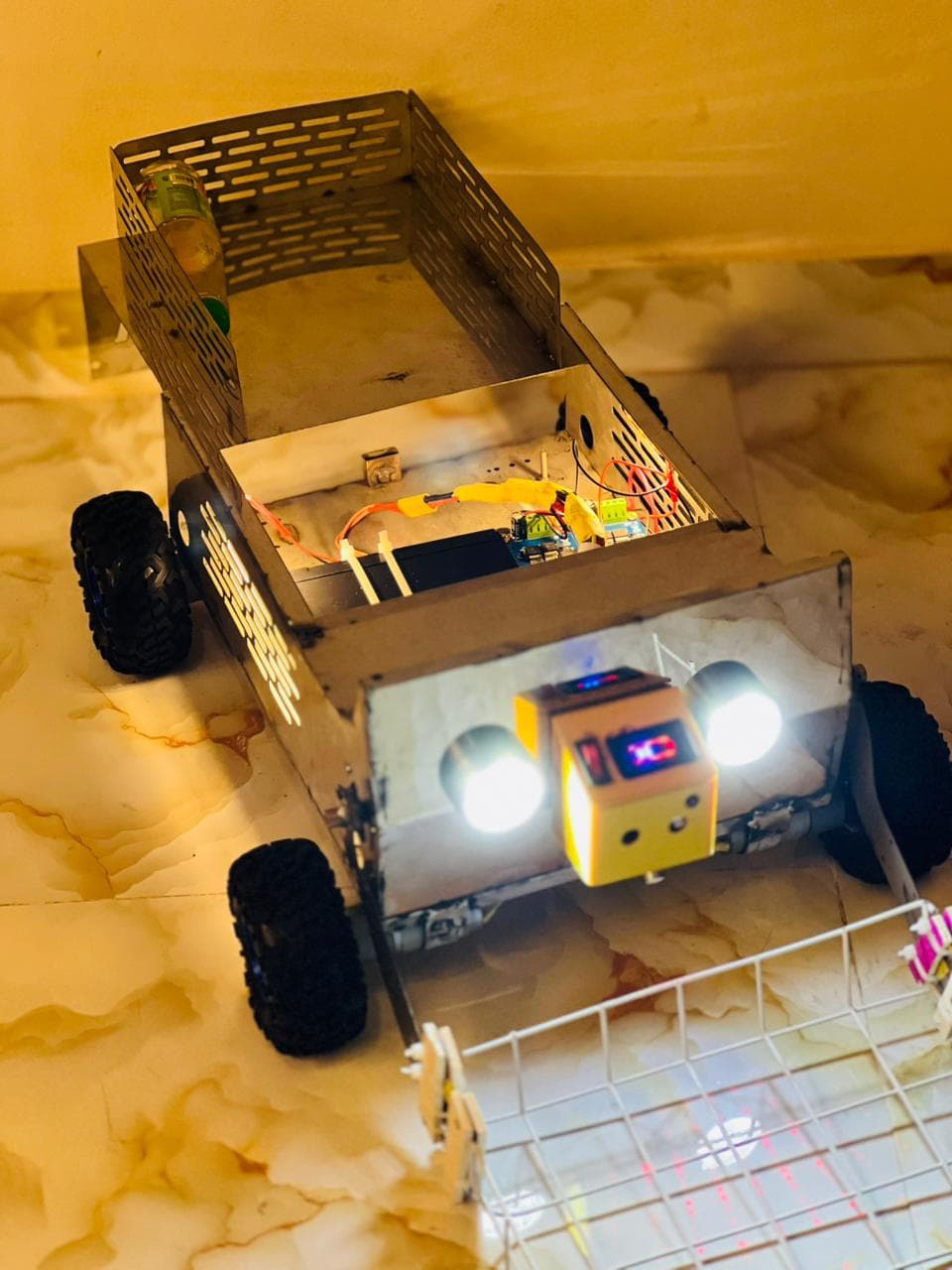
The sensor head sits between the headlamps, so the camera sees whatever the lights do.
Collection
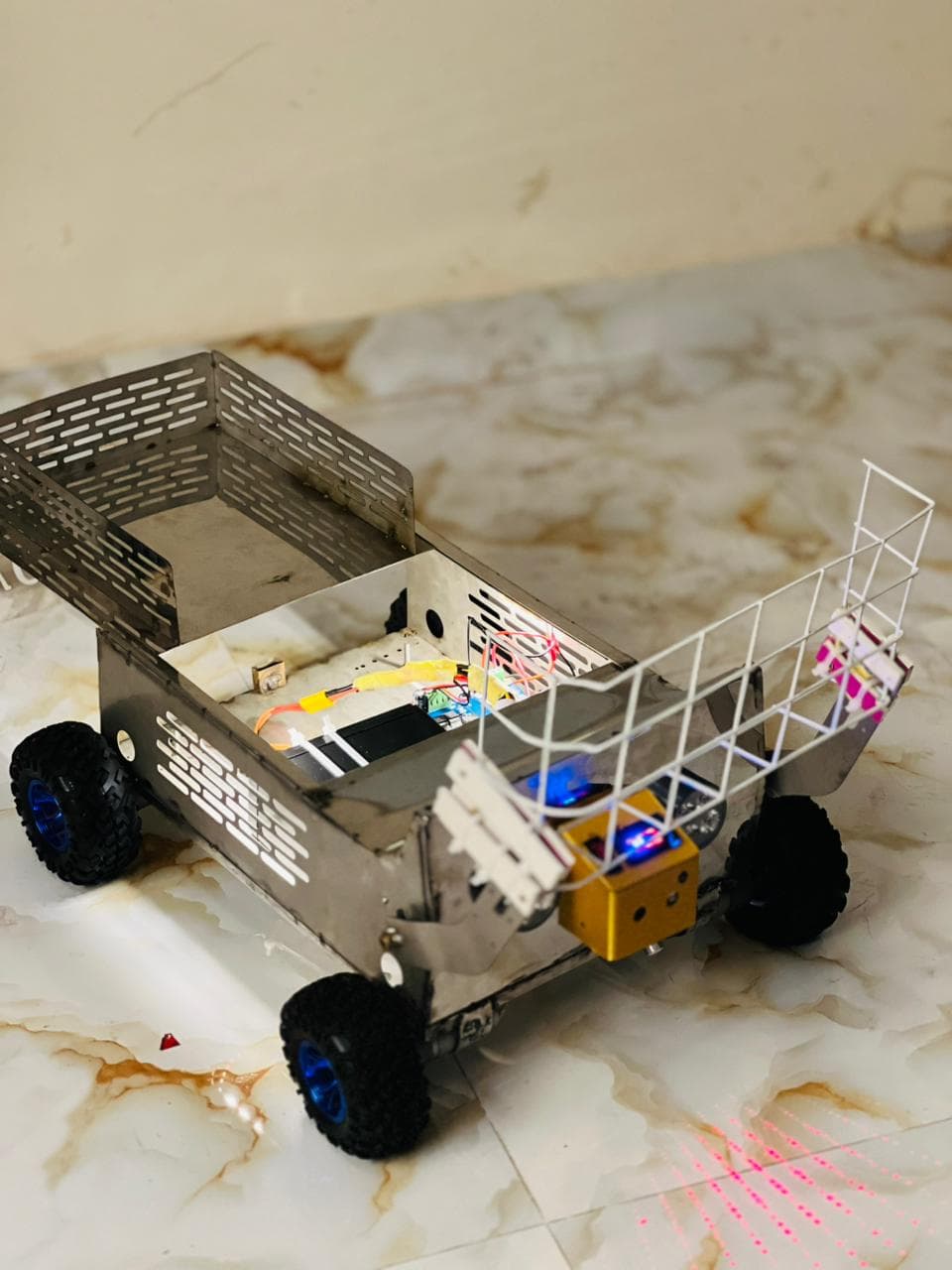
The wire scoop rides ahead of the front axle and funnels an object onto the tray.
Storage
Everything picked up goes into the slotted bed behind the cab and stays there.
Shot during the build and the first test runs — nothing staged, nothing rendered.
Chassis and drive
Headlights and sensor head
Collection mechanism
The cut-out wordmark
Directions we are working toward, not finished features.
Sharper detection
Improve how reliably the model identifies waste in awkward lighting, partial cover and cluttered ground.
Longer runs
Extend battery life so a single charge covers meaningfully more ground before the robot needs attention.
Greater capacity
Increase how much the robot can carry before it has to be emptied.
More terrain
Widen the range of surfaces and environments the robot can operate on confidently.
Plastic and other non-biodegradable objects it finds nearby. Those are the materials that stay in the environment indefinitely, so they are the ones worth removing.